
Back Pain Series - Topic 1 - Understanding Lower Back Pain & Spinal Pain – Why Your Scan Doesn’t Always Tell the Full Story
Lower back pain and spinal pain are incredibly common. In fact, according to guidance from National Institute for Health and Care Excellence, around 60–80% of adults will experience lower back pain at some point in their lives.
For many people, back pain can feel worrying — especially when it’s severe, recurring, or affecting sleep, work, exercise, or daily life. One of the first questions people ask is:
“Should I have a scan?”
The answer is often not necessarily.
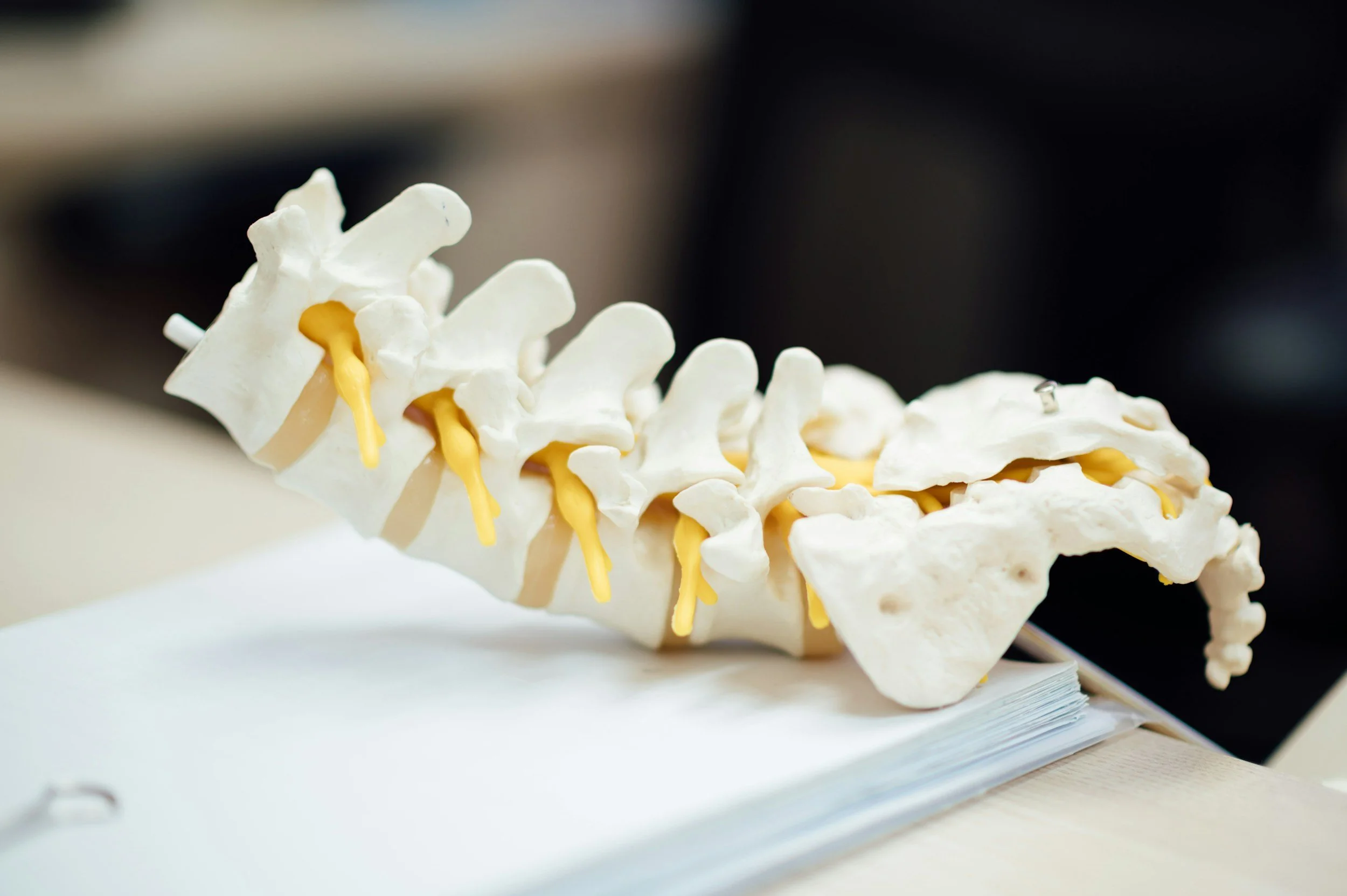
Spinal model at our physio clinics in Manchester.
What actually causes lower back pain?
The spine is made up of many different structures, including:
Muscles
Joints
Ligaments
Intervertebral discs
Nerves
Fascia and connective tissues
Any of these structures can become irritated or sensitised and contribute to pain.
Sometimes lower back pain starts after:
Lifting or bending
A sporting injury
Gardening or DIY
Stress or lack of sleep
Long periods of sitting
Doing “too much too soon”
And sometimes there’s no obvious trigger at all.
Why scans don’t always explain pain
Many patients that attend our physio clinics are surprised to learn that MRI scans often show “changes” in people who have absolutely no pain.
Research has shown that disc bulges, degeneration, arthritis, and “wear and tear” are commonly seen in pain-free adults. These changes are often just normal age-related findings — much like getting wrinkles or grey hair.
By the age of 30, many people already have some spinal changes visible on imaging, even when they feel completely fine.
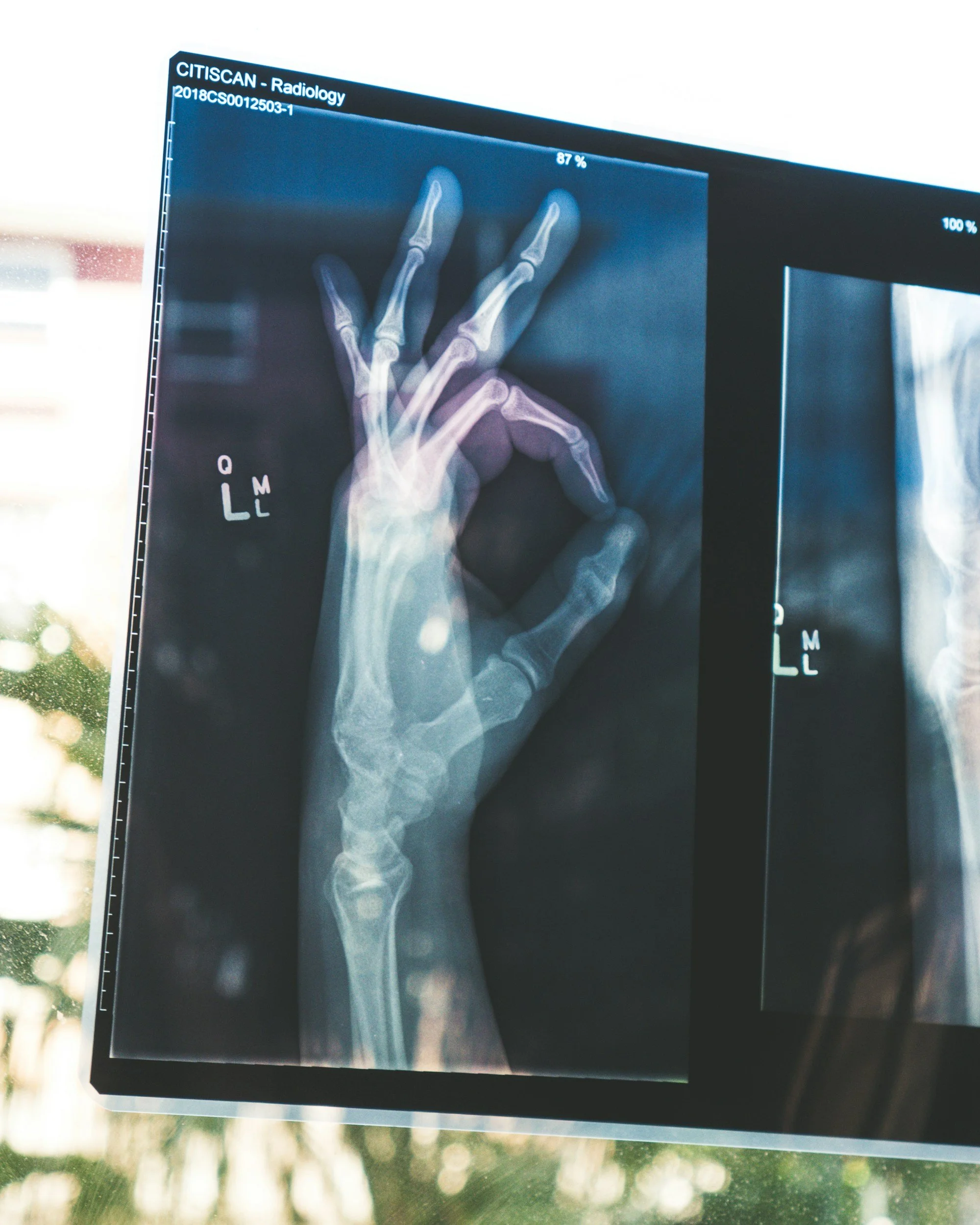
Scan results.
This is why scans are generally used to:
Rule out serious pathology
Investigate significant nerve symptoms
Help guide surgical planning if required
In the absence of neurological deficits such as:
Significant weakness
Loss of bladder or bowel control
Progressive numbness
Severe nerve compression
…surgery is rarely indicated for lower back pain.
Hurt does not always equal harm
One of the most important messages in modern spinal pain treatment is:
Pain does not always mean damage.
Backs are strong, adaptable, and designed for movement.
Pain can sometimes persist because tissues have become sensitive — not because the spine is “out of place,” “damaged,” or “crumbling.”
Understanding this can be incredibly reassuring and is often a key part of recovery.
How physiotherapy can help
All our physiotherapists are highly experienced and qualified in treating spinal pain. At our physio clinic in Heaton Moor, James has recently completed a years spinal specialist rotation in the NHS and this is his particular area of clinical interest.

Execises for low back pain. Our spinal specialist physio James Sweeney delves into this topic
Rather than focusing only on scans or structural findings, treatment looks at:
Movement patterns
Strength and mobility
Nervous system sensitivity
Lifestyle and stress factors
Exercise rehabilitation
Building confidence in movement again