
Radial Shockwave Therapy, Part 1 - How It Works and What to Expect
Persistent tendon or heel pain can be frustrating. You may have rested, stretched, changed your footwear or tried exercises, only for the pain to return as soon as you increase your activity again.
At PhysioHub, we use radial shockwave therapy as part of a structured rehabilitation programme for selected, persistent musculoskeletal conditions. Treatment is delivered using our STORZ MEDICAL MASTERPULS® R-SW100. This is a high-quality radial shockwave system designed specifically for the treatment of musculoskeletal pain and tendon problems.
Shockwave Therapy is not a replacement for a thorough assessment or progressive rehabilitation. Just like any treatment that we deliver, it needs to be the right treatment, for the right person at the right time. When treatment is suitable and delivered alongside an appropriate loading programme … the magic starts to happen! It can be an incredibly valuable way to reduce pain and help someone move forwards with their recovery.
“… the right treatment, for the right person at the right time.”
What is radial shockwave therapy?
Radial shockwave therapy is a non-invasive treatment that delivers a series of mechanical pressure waves into the tissues through the skin.
Despite the name, it does not involve an electrical shock. The treatment head is placed against the skin with a small amount of gel, and pressure waves are transmitted into the painful area. These waves spread outwards, “radially”, from the point of contact.
The clinical term is radial extracorporeal shockwave therapy, often shortened to radial ESWT or RSWT. “Extracorporeal” simply means that the energy is delivered outside the body. It’s not something you would want delivered intracorporeally!!
Radial shockwave is the form of shockwave therapy used at PhysioHub.
The STORZ shockwave machine we use
We have invested in a STORZ MEDICAL MASTERPULS® R-SW100, a specialist radial shockwave system produced by one of the best established manufacturers in the field.
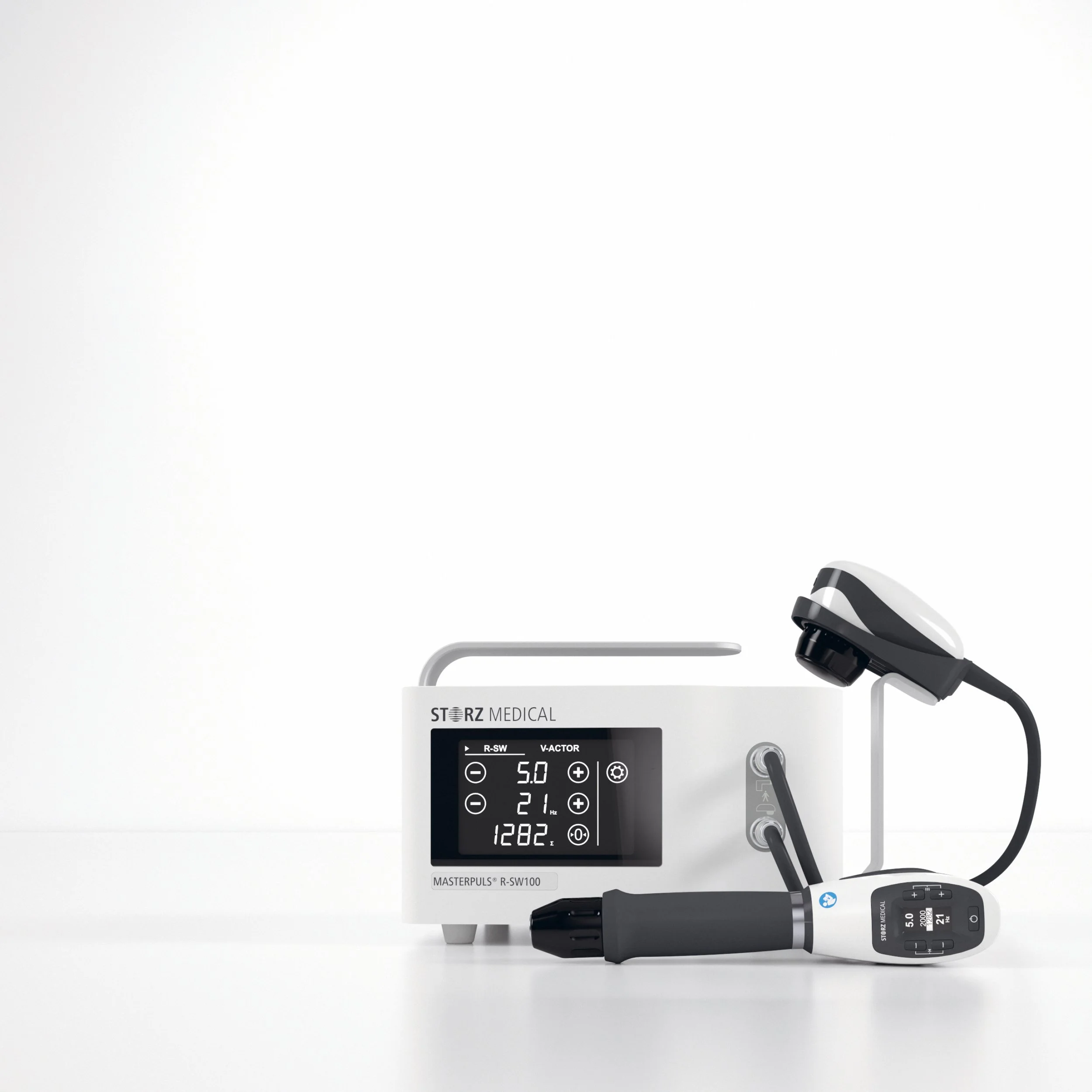
STORZ MEDICAL MASTERPULS® R-SW100
Inside the handpiece, compressed air accelerates a small projectile. This strikes a transmitter at the end of the “Falcon” handpiece and creates mechanical pressure waves. When the transmitter is placed against the skin, those waves pass into the tissues beneath it.
The machine allows the physiotherapist to adjust the pressure, frequency, number of impulses and treatment head to suit the condition, the area being treated and the patient’s tolerance. This means treatment can begin at a manageable level and be progressed appropriately within and between sessions, rather than using an identical setting for everybody. We don’t use a “cookie cutter” at PhysioHub!
How is shockwave treatment performed?
Shockwave therapy begins with a physiotherapy assessment. This is important because not every painful tendon requires shockwave, and pain in the same area can have several possible causes.
Your physiotherapist will discuss; onset of symptoms, current symptoms, activity levels, medical history and previous treatment. They will then examine the painful area and assess factors such as strength, joint and tissue mobility, tendon-loading capacity and the demands of your work or sport. The intensity of the assessment will vary depending on how severe and irritable the pain is. Although our assessment is very accurate at diagnosing tendon issues, occasionally, further investigation or imaging may be recommended if the diagnosis is uncertain.
During a treatment session we will typically first use shockwave to treat and identified tight bands of muscle or fascia in the surrounding areas. For example, in the calf or hamstring if treating Achilles tendon pain. Once released we will then focus in on the problematic tendon. Whether we are treating muscle or tendon, your therapist will work through the following process:
The treatment area is identified (i.e. muscle or tendon) and a small amount of contact gel is applied.
The STORZ handpiece is placed against the skin over and around the symptomatic tissue.
A controlled series of pressure-wave impulses is delivered, with the settings adjusted to an appropriate and tolerable level.
The length of time spent treating each area varies. Typically, 90 seconds to 3 minutes is spent on each area with a minimum of 3 areas treated per session.
Treatment may be combined with manual therapy.
Treatment is always followed by advice and a progressive rehabilitation programme specific to your condition and goals.
A session may feel uncomfortable, particularly over the most sensitive part of a tendon, but the intensity can be adapted throughout. As discussed above, Shockwave treatment itself usually takes only a few minutes, although the appointment also includes a clinical review, advice and rehabilitation planning.
At PhysioHub we recommend a minimum of 4 shockwave sessions, hence why we offer a discounted 4 session package. We usually recommend 3 x weekly sessions of Shockwave followed by 1 follow up session 2 weeks later. In some cases, we may recommend up to 6 sessions. The exact programme of treatment depends on the diagnosis, response to treatment and wider rehabilitation plan.
How does radial shockwave work?
Radial shockwave produces a controlled mechanical stimulus within the treated tissues. Current research suggests that this may influence pain and tissue biology through several interacting processes rather than one single effect.
Pain modulation
The repeated pressure wave stimulus may alter how pain signals are processed locally and within the nervous system. Some people notice an early reduction in sensitivity, which can help them tolerate movement and rehabilitation more comfortably.
Mechanotransduction and tendon cell changes
Tendons respond to mechanical load. Mechanotransduction is the process through which cells detect a physical stimulus and convert it into a biological response. Very similar to how muscles react to weight training in the gym. Shockwave is thought to stimulate cell-signalling activity associated with tissue repair and adaptation.
Think of a tendon which has been sore for many months and the body is not healing effectively. Shockwave can help kick start the healing process by creating very controlled mechanical impulse to the tissue thus;-
1. stimulating stem cells to release new tendon cells called tenocytes, and,
2. stimulating multiplication of existing tendon cells/ tenocytes (proliferation).
This can help regenerate the tissue.
Local circulation and tissue response
Experimental research suggests that shockwave may encourage the release of signalling substances involved in local blood-vessel formation, circulation and tissue remodelling. These proposed biological effects are still being studied, so it is more accurate to describe shockwave as stimulating a healing response rather than claiming that it directly “repairs” a tendon.
Creating an opportunity to rehabilitate
One of the most useful clinical effects may be the opportunity shockwave creates. If pain becomes more manageable, a patient may be better able to perform the progressive strengthening and loading needed to restore the tendon’s capacity.
That is why we do not view shockwave as a stand-alone cure. The aim is to combine it with sensible load management, progressive exercise and a planned return to work, running, gym activity or sport.
What conditions can radial shockwave be used for?
Following assessment, radial shockwave may be considered for persistent conditions such as:
Plantar heel pain or plantar fasciopathy
Achilles tendinopathy (mainly mid and upper portions)
Patellar tendinopathy
Gluteal tendinopathy, commonly associated with the umbrella diagnosis of Greater trochanteric pain syndrome
Tennis elbow and golfer’s elbow
Calcific rotator cuff-related shoulder pain
Shockwave is generally considered when symptoms have persisted and have not improved sufficiently with appropriate first-line management. Suitability depends on the diagnosis, symptom duration, medical history and previous rehabilitation—not simply where it hurts.
Is radial shockwave safe?
Radial shockwave is non-invasive and is well tolerated when it is delivered by a trained clinician following appropriate screening. Temporary soreness, redness, bruising or a short-lived increase in symptoms can occur after treatment.
Shockwave is not suitable for everyone. Before your appointment we will ask you to complete a consent form. The physiotherapist will use this to screen for relevant precautions and contraindications, including the treatment location, pregnancy, bleeding or clotting problems, certain medications, altered sensation, infection and other medical conditions. If shockwave is not appropriate, we will explain why and discuss suitable alternatives.
Your treatment at PhysioHub
The machine is only one part of your care. At PhysioHub, we combine clinical assessment, individually adjusted treatment settings and progressive rehabilitation to help you work towards the activities that matter to you. Your response is reviewed throughout. Completing a course of shockwave is the first step in your faster journey to recovery.
Book a physiotherapy assessment at David Lloyd Manchester North in Middleton. We will explain the cause of your symptoms, discuss your options and advise whether radial shockwave is appropriate for you.
Book your assessment at PhysioHub.
Trust in our experience.