
Do your headaches start at the base of your skull, creep up the back of your head and come with a stiff, sore neck? If so, the problem may not be in your head at all. It may be coming from your neck.
This type of headache is called a cervicogenic headache. It can affect your concentration, sleep and work, and make it hard to enjoy everyday life. The good news is that physiotherapy for cervicogenic headaches has some of the strongest evidence of any non-drug treatment for headache.
In this guide, we explain what cervicogenic headaches are, how to tell them apart from migraines and tension headaches, what causes them, and how a physio can help.
What is a cervicogenic headache?
A cervicogenic headache is a secondary headache. That means it is caused by an underlying problem somewhere else, and in this case the source is the neck.
Why does a neck problem cause head pain?
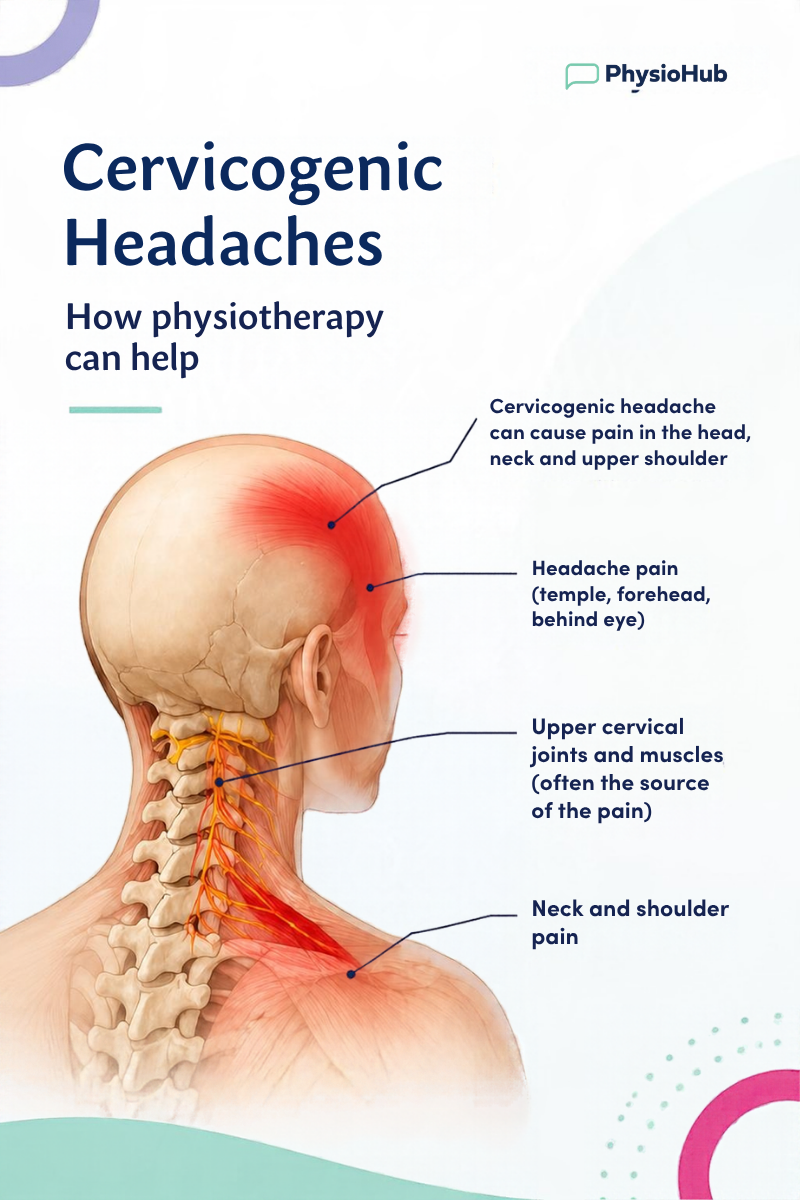
The nerves from the top three levels of your neck (C1 to C3) feed into the same relay centre in the brainstem as the trigeminal nerve, which carries sensation from your face, forehead and around the eyes. This relay centre is called the trigeminocervical nucleus. Because the signals share this pathway, the brain can’t always tell where they came from. Pain from joints, muscles or other structures in the upper neck can therefore be felt in the head, often as far forward as the forehead, temple or behind the eye. This is known as referred pain.
How is it diagnosed?
Not every headache with neck pain is cervicogenic. Neck pain is very common in migraine and tension-type headache too. Under the International Classification of Headache Disorders (ICHD-3), a diagnosis of cervicogenic headache needs clinical evidence that a disorder in the neck is causing the headache. Examples include headache that is closely linked to neck movement or posture, reduced neck range of movement, or headache that eases when the neck problem is treated. That is why a thorough assessment matters.
Cervicogenic headache symptoms
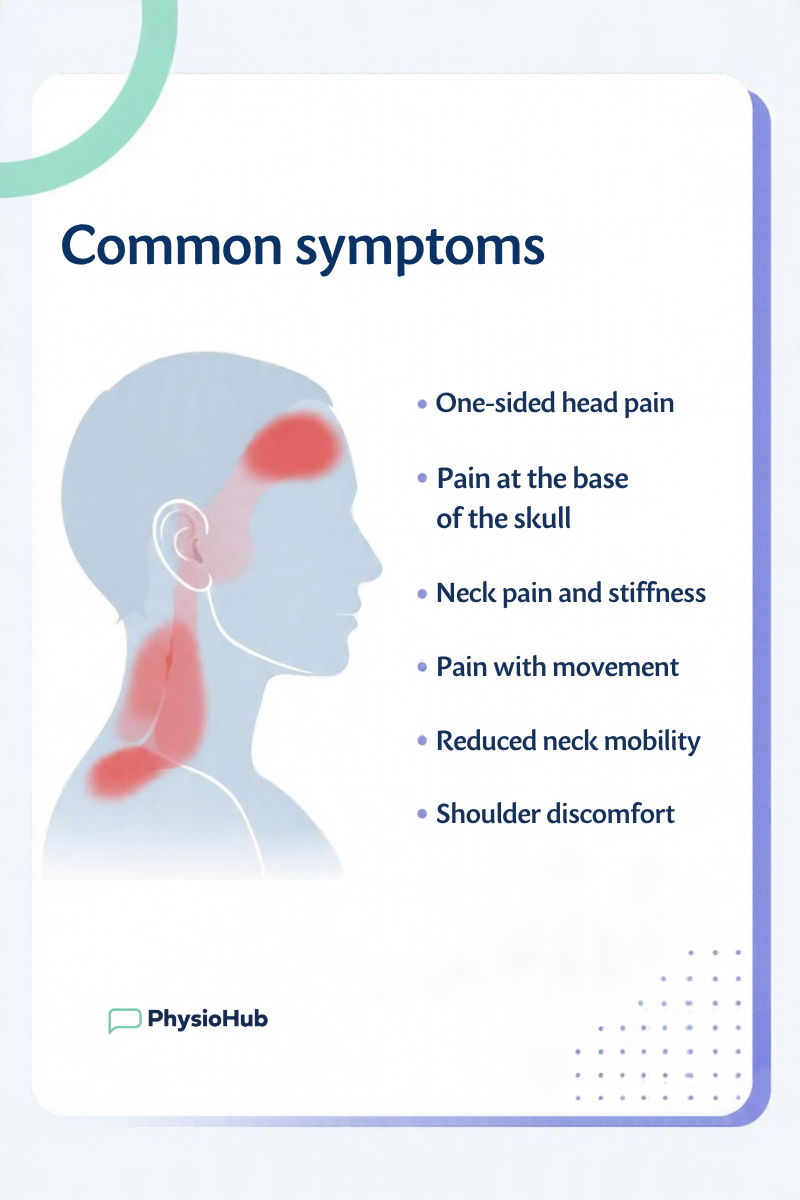
These are the most common signs that your neck may be contributing to your headaches:
One-sided head pain. The headache usually stays on the same side and doesn’t switch sides from one episode to the next.
Pain starting in the neck or base of the skull. It often spreads forwards towards the forehead, temple or behind the eye.
Neck pain and stiffness. Turning your head fully, for example to check your blind spot when driving, may be difficult.
Headaches brought on by neck movement or sustained positions. Long spells at a desk, looking down at your phone or sleeping awkwardly may set them off.
Tenderness in the upper neck. Pressing on the joints or muscles at the base of the skull may reproduce your familiar headache.
Shoulder or upper-back discomfort on the same side.
These features overlap with other headache types, so they are a guide rather than a diagnosis.
What causes cervicogenic headaches?
There usually isn’t a single cause. More often, several factors build up over time.
1. Upper neck joint dysfunction
Restricted or irritated joints in the upper neck, particularly between the top two vertebrae (C1 and C2), are one of the most common sources. A physio can test this with the cervical flexion-rotation test, which checks how far your upper neck rotates. Reduced rotation on one side is strongly associated with cervicogenic headache.
2. Reduced deep neck muscle control and endurance
The deep neck flexor muscles at the front of your neck help hold your head steady. People with cervicogenic headache often show reduced endurance and control in these muscles, with the larger, more superficial muscles working harder to compensate. Muscle tightness alone does not mean a headache is cervicogenic, but muscle function is often part of the picture.
3. Prolonged desk work and screen time
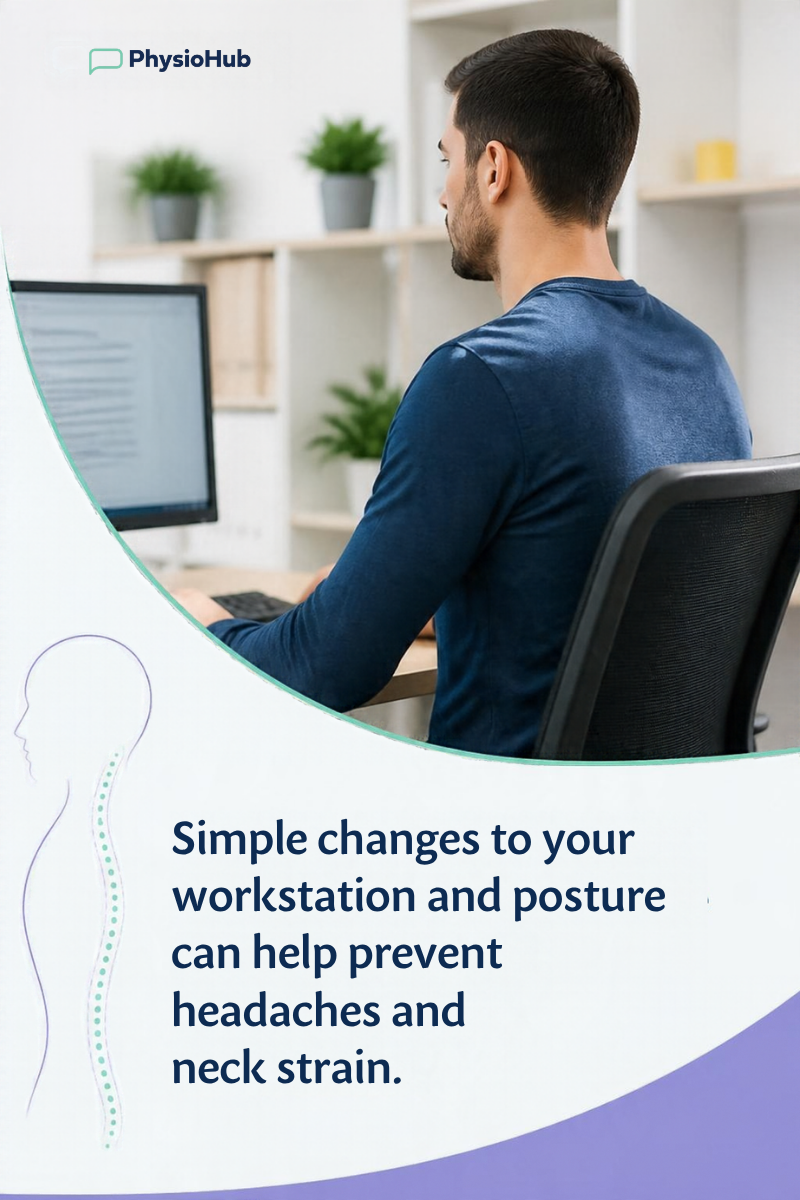
Long periods at a computer or looking down at a phone can aggravate neck symptoms in some people. There is no single “perfect” posture, and posture is rarely the only cause. The bigger problem is usually staying in any one position for too long.
4. Previous neck injury, including whiplash
Headaches that start after a car accident, fall or sports injury should always be assessed properly rather than put down to “just tight muscles”. Whiplash can change how the neck moves and how sensitive it is to pain.
5. Reduced physical activity
Long periods of inactivity can reduce neck and upper-body strength and endurance, which lowers your tolerance for everyday demands like a long day at work or a long drive.
Cervicogenic headache vs migraine vs tension headache
Understanding the differences helps make sure you get the right treatment.
Cervicogenic headache: usually one-sided and doesn’t switch sides. It starts in the neck and is linked to neck movement, reduced range of movement and sustained positions. Nausea and light sensitivity are usually absent or mild.
Migraine: moderate to severe throbbing pain, often with nausea, sensitivity to light and sound, and sometimes visual aura. Neck pain is very common during a migraine and can come before the headache, so it doesn’t automatically mean the neck is the source.
Tension-type headache: a pressing or tight, band-like feeling, usually on both sides of the head, typically mild to moderate. It doesn’t usually worsen with routine activity.
These conditions can overlap, and some people have more than one type. A detailed history and physical examination is the best way to tell them apart.
How physiotherapy helps cervicogenic headaches
Physiotherapy is a first-line treatment for cervicogenic headache. In a well-known randomised controlled trial of 200 people with cervicogenic headache (Jull et al., 2002), manual therapy and a specific neck exercise programme each significantly reduced headache frequency and intensity. The benefits were still present at 12 months. Combining the two was at least as effective as either alone.
Here’s what treatment at PhysioHub typically involves.
1. A thorough physio assessment
Your physio will ask detailed questions about your headaches: where they start, how often they happen, how long they last, and what makes them better or worse. They will also screen for anything that needs medical review before treatment starts.
The physical examination may include:
Neck range of movement, including the flexion-rotation test
Hands-on assessment of the upper neck joints to see whether pressing on them reproduces your headache
The craniocervical flexion test, which checks deep neck muscle control
Shoulder blade and upper-back function
Your work set-up, daily habits and activities that trigger symptoms
2. Manual therapy
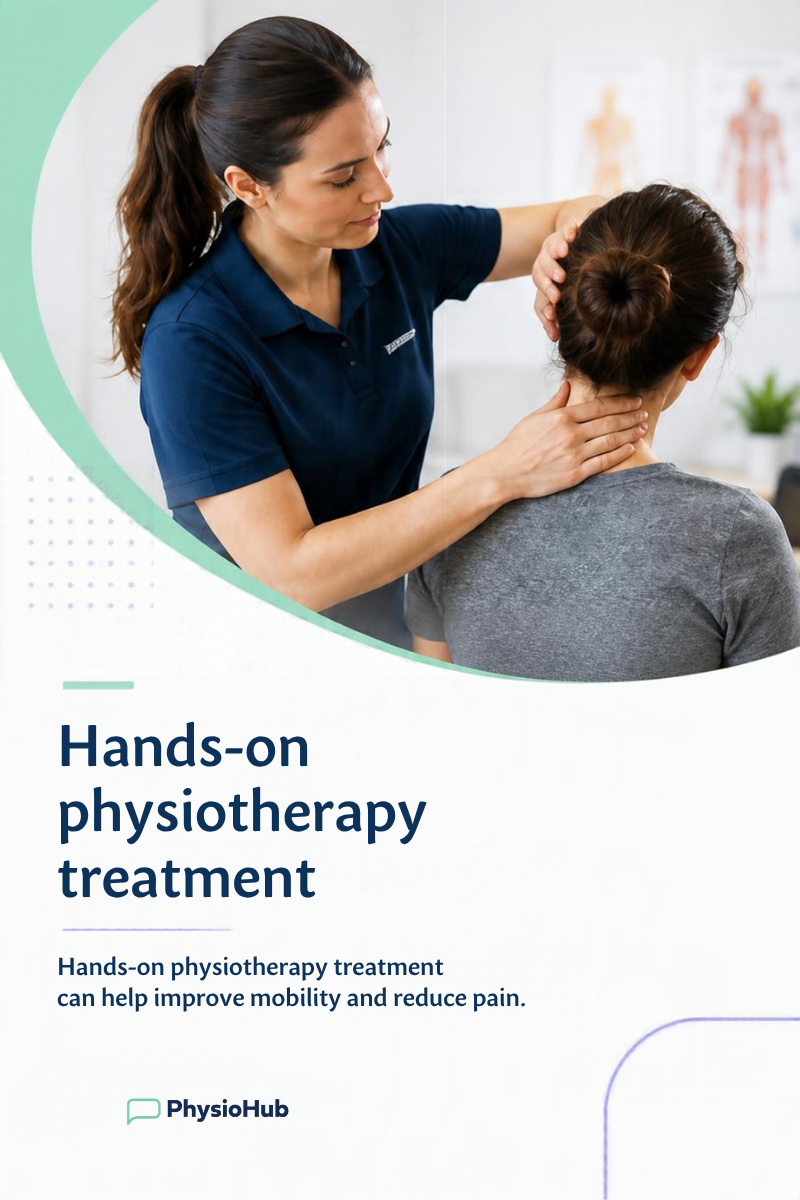
Depending on your assessment, treatment may include gentle joint mobilisation of the upper neck and soft-tissue techniques. This can ease pain and restore movement in the short term, which makes it easier to start exercising. It works best as part of a wider plan rather than on its own.
3. Neck strengthening exercises
Neck strengthening exercises for cervicogenic headaches are a key part of long-term recovery. Your programme will usually start with low-load deep neck flexor training, which teaches the small stabilising muscles to work properly. It then progresses to strengthening for the neck, shoulder blades and upper back. The aim is a neck that copes comfortably with your normal day, so you aren’t relying on passive treatment.
4. Restoring neck mobility
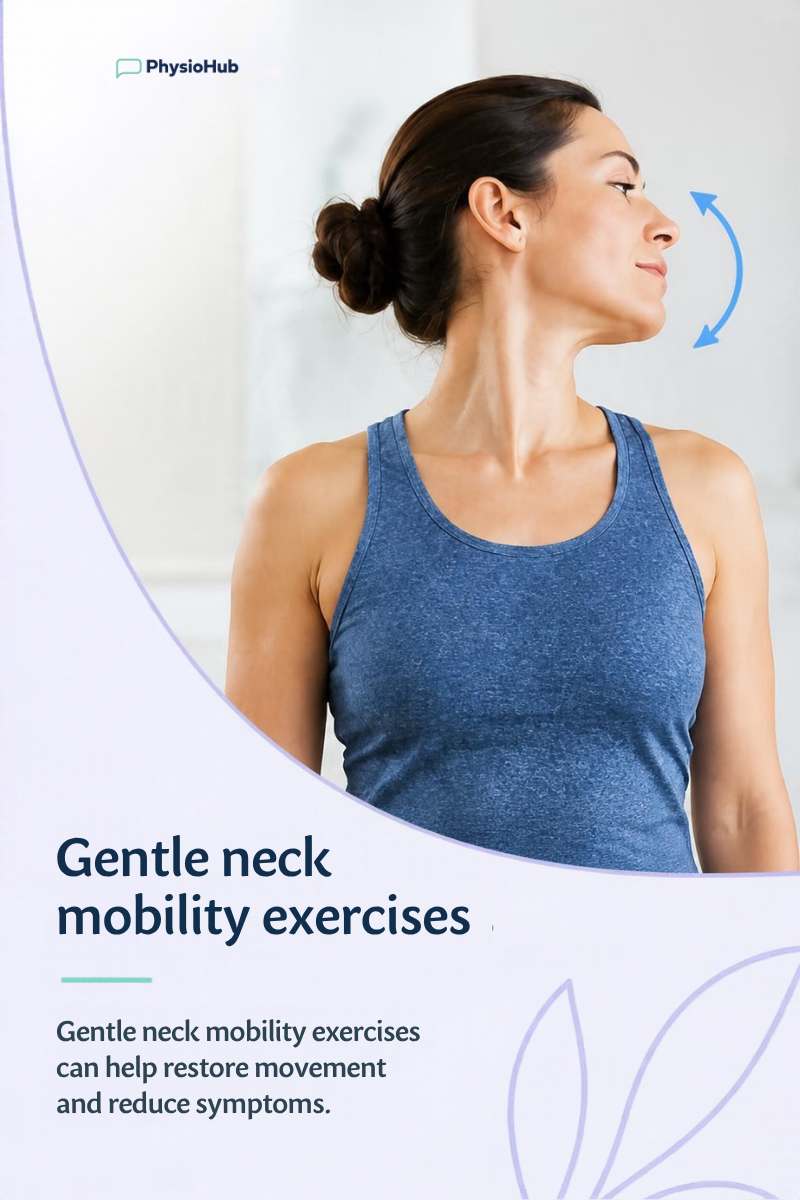
If your upper neck is stiff, specific mobility exercises, including self-mobilisation techniques for the C1–C2 joint, can help you regain comfortable rotation.
5. Workstation and desk advice
If desk work triggers your headaches, small changes can make a real difference:
Setting your screen height and distance correctly
Keeping frequently used items within easy reach
Taking short, regular movement breaks
Varying between sitting and standing
Reducing long spells looking down at your phone
The goal isn’t to hold a rigid upright posture all day. It’s to move regularly and avoid staying in one position for too long. For more detailed workplace assessments, our occupational health physio John can help.
6. Education and self-management
Understanding why your headaches happen helps you manage them with confidence. Your physio will help you spot your triggers, plan how to handle flare-ups, and build in sensible habits around sleep, activity and pacing.
Exercises for cervicogenic headaches
The right exercises depend on your diagnosis, how your neck moves and your medical history. Common starting points include:
Chin nods (deep neck flexor activation). Lie on your back with your head supported. Gently nod your chin as if saying “yes”, without lifting your head. Hold for a few seconds, then relax. The movement should be small and gentle, not a strong push.
Gentle neck rotation. Slowly turn your head from side to side within a comfortable range. Don’t force the end of the movement.
Shoulder blade strengthening. Controlled rows with a resistance band strengthen the muscles between your shoulder blades and upper back.
General activity. Walking, swimming or whatever you enjoy helps maintain movement and fitness.
Stop and seek advice if an exercise causes a significant increase in headache, dizziness, visual disturbance, pins and needles, or any unusual symptoms. These examples are not a substitute for an individual programme. If your headaches are new, severe or unexplained, get assessed before treating them yourself.
How long does physio take for cervicogenic headaches?
Recovery depends on how long you’ve had symptoms, what’s driving them and whether another headache type is also involved. Many people notice changes in neck movement and headache frequency within a few sessions. A full strengthening programme usually takes several weeks to build lasting results. Your physio will track your progress and adjust the plan as you go.
When to seek medical advice for a headache
Most headaches are not caused by anything serious, but a new or unusual headache shouldn’t be assumed to be coming from the neck.
Call 999 or go to A&E if you have:
A sudden, extremely severe headache that peaks within seconds to a minute (a “thunderclap” headache)
New weakness, numbness, slurred speech, facial drooping, confusion or loss of vision
A severe headache after a head injury
Get urgent medical advice (GP or NHS 111) if your headache:
Comes with a fever, stiff neck or rash
Is getting steadily worse over days or weeks
Is triggered by coughing, straining or exercise
Comes with new dizziness, double vision, difficulty swallowing or unsteadiness alongside neck pain
Is a new headache after age 50, especially with scalp tenderness or jaw pain when chewing
If you have recurring headaches or ongoing neck pain affecting your daily life, book an assessment with a physiotherapist or your GP.
Book a cervicogenic headache assessment in Stockport or Manchester
Recurring headaches are frustrating, especially when they affect your work, sleep and time with family. If your headaches seem linked to neck pain or stiffness, a physiotherapy assessment can find out what’s driving them and build a treatment plan around you.
At PhysioHub, our spinal specialist James combines a detailed assessment, hands-on treatment, targeted exercise and practical advice to help you get on top of neck-related headaches for the long term.
Don’t let recurring headaches run your day. Book an assessment at our Stockport or Manchester clinic today.
Frequently asked questions about cervicogenic headaches
Can physiotherapy cure cervicogenic headaches?
Physiotherapy is one of the most effective treatments for cervicogenic headache. Research shows that manual therapy and specific neck exercises reduce headache frequency and intensity, with benefits lasting at least 12 months. Results vary, and some people also need medical input.
Can a stiff neck cause headaches?
Yes. Problems in the upper neck joints and muscles can refer pain into the head. A tight neck doesn’t automatically mean your headache is cervicogenic, though, because neck pain is also common with migraine and tension headache. An assessment can identify the likely source.
Where do you feel a cervicogenic headache?
Usually on one side, starting at the base of the skull or upper neck and spreading towards the forehead, temple or behind the eye.
What is the best treatment for cervicogenic headaches?
The best evidence supports combining manual therapy with a specific neck exercise programme, particularly deep neck flexor training, alongside advice on aggravating activities. Your plan should be based on a thorough assessment.
Should I massage my neck if I have a cervicogenic headache?
Gentle massage may ease muscle discomfort for some people, but it rarely fixes the underlying problem on its own. Avoid forceful self-massage or neck “cracking”, and get assessed if your headache is new, severe or unexplained.
Can sitting at a desk all day cause cervicogenic headaches?
Long periods at a desk can aggravate neck-related headaches, especially without movement breaks. Regular breaks, a well-set-up workstation and neck strengthening usually help, but posture is rarely the only cause.
Do I need a GP referral to see a physio for headaches?
No. You can book directly with PhysioHub without a GP referral. If your physio finds anything during the assessment that needs medical review, they will advise you on the next step.