
Tendon Masterclass - Part 2. Optimal loading, by Tom O’Sullivan
Load management: finding the tendon’s starting point
Early tendon rehabilitation often involves identifying which activities are currently overloading the tendon, then potentially temporarily reducing or modifying these.
That doesn't necessarily mean stopping everything.
For a runner with Achilles tendon pain, for example, we might temporarily reduce sprinting, hills or total mileage while maintaining some easier running or alternative cardiovascular exercise.
For a gym-goer with shoulder tendon pain, we might temporarily modify heavy overhead pressing without stopping their entire gym programme.
We then introduce exercises at a level the tendon can currently tolerate.
The aim is to find the appropriate starting dose of load and progressively build from there.
Stage 1: Isometric loading
An isometric exercise involves producing muscular force without movement occurring.
For example, pushing against an immovable resistance and holding the contraction.
Isometrics can be useful early in tendon rehabilitation because they allow us to introduce meaningful muscular and tendon loading in a very controlled way.
Research involving patellar tendinopathy has also suggested that isometric exercise can provide short-term pain relief for some people.
However, this isn't universal.
Isometrics shouldn't be thought of as a magic treatment for tendon pain, and they aren't necessarily required before someone can progress to other strengthening exercises.
They are simply one useful tool within a progressive loading programme.
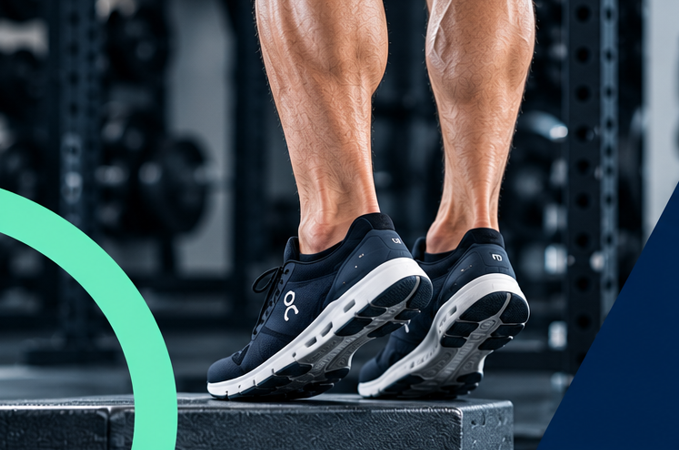
Inner range isometric calf raise for Achilles Tendinopathy
Stage 2: Slow, controlled strength work
Once appropriate, rehabilitation generally progresses towards slow resistance exercise.
This might include exercises such as:
Calf raises for Achilles tendinopathy
Leg press or knee-extension exercises for patellar tendon problems
Rotator cuff resistance exercises for shoulder tendinopathy
Wrist strengthening for tennis elbow
Hip strengthening for gluteal tendinopathy
Initially, the movement may be deliberately slow and controlled, progressed by increasing the resistance over time.
This stage is important because now we're trying to improve the capacity of the whole muscle-tendon unit.
Stage 3: Heavier and more functional loading
As strength improves, rehabilitation should begin to reflect what the person actually needs their tendon to do.
For one person that might mean climbing stairs and walking comfortably.
For another it could mean:
Heavy gym training
Running
Sprinting
Jumping
Football
Tennis
Padel
Hiking
Someone hoping to return to competitive sport needs considerably more tendon capacity than someone whose main goal is comfortable everyday walking.
Rehabilitation should align with that.
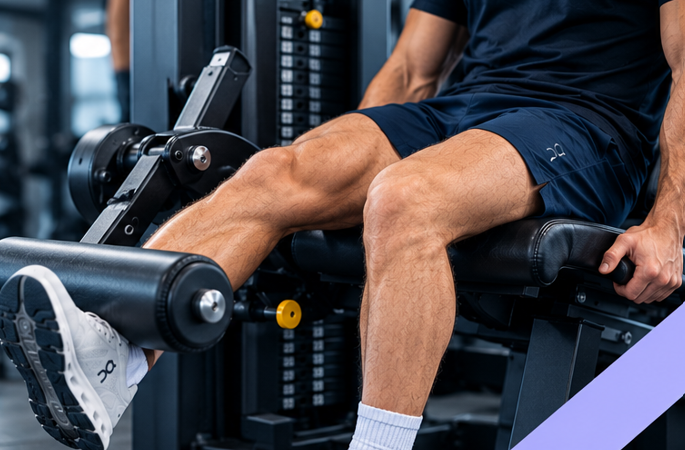
Dynamic knee extension for Patellar Tendinopathy
Stage 4: Faster, dynamic tendon loading
Running and jumping place very different demands on a tendon compared with a slow calf raise or leg press.
Tendons involved in sporting activity need to be able to store and release energy quickly.
Later rehabilitation may therefore introduce increasingly dynamic exercises such as:
Faster calf work
Hopping
Skipping
Jumping
Landing
Running
Accelerating
Decelerating
Changing direction
This progression from controlled strength towards faster energy-storage loading is particularly important when returning someone to running and sport, getting them ready for what the tendon is required to do as opposed to just getting rid of the pain.
Does tendon pain mean I'm damaging it?
Not necessarily.
Pain and tendon structure are related, but they aren't the same thing.
A painful tendon doesn't automatically mean that fibres are tearing every time you exercise.
Equally, having no pain doesn't necessarily mean that a tendon has completely regained its previous strength or capacity.
This is why tendon rehabilitation needs to consider several things together:
Pain + strength + function + loading history + tendon capacity.
We can often allow some symptoms to occur during rehabilitation, depending upon the tendon, its irritability and the response afterwards (particularly over the following hours and the next day) as this can sometimes be more useful than focusing solely on whether an exercise produced any discomfort at all.
Struggling with persistent tendon pain?
At PhysioHub, tendon rehabilitation is an area we're particularly interested in.
Tom O'Sullivan and the PhysioHub team assess and treat tendon problems including Achilles tendinopathy, plantar heel pain, patellar tendinopathy, gluteal tendinopathy, rotator cuff problems, tennis and golfer's elbow and other persistent tendon conditions.
Treatment starts with understanding why your tendon has become painful and what it currently can, and can't, tolerate.
From there, we can build a rehabilitation programme tailored to you, incorporating load management, progressive strengthening and, where appropriate, treatments such as manual therapy or shockwave therapy.
PhysioHub clinics are based at:
David Lloyd Manchester North, Middleton
Heaton Moor, Stockport
If tendon pain is stopping you from running, training, playing sport or simply doing the things you enjoy, book an assessment pressing here with Tom and the PhysioHub team.
The goal is to build your tendon back up for what you want it to do, not just get rid of the pain.