Staying Strong and Steady After 65: Strength, Balance and Physiotherapy for Older Adults
Getting older often comes with changes in strength, balance, stamina and confidence. You may notice that the stairs feel a little harder, getting up from a low chair takes more effort, or that you simply don't feel as physically capable as you once did.
But getting older doesn't have to mean becoming weak or losing your independence.
While some physical changes are a natural part of ageing, many of the things we associate with "getting old" can be slowed — and in some cases significantly improved — by staying active and continuing to challenge our bodies.
At PhysioHub, our physiotherapists work with people of all ages from our clinics at David Lloyd Manchester North in Middleton and Heaton Moor, Stockport. This includes helping older adults maintain or regain their strength, mobility, balance and confidence.
Tom O'Sullivan and the PhysioHub team have extensive experience rehabilitating older patient groups, from people who simply want to remain active and independent through to those recovering from injury, surgery or a period of reduced mobility.
Here are three of the most important things we recommend to help you stay strong, steady and independent after 65.
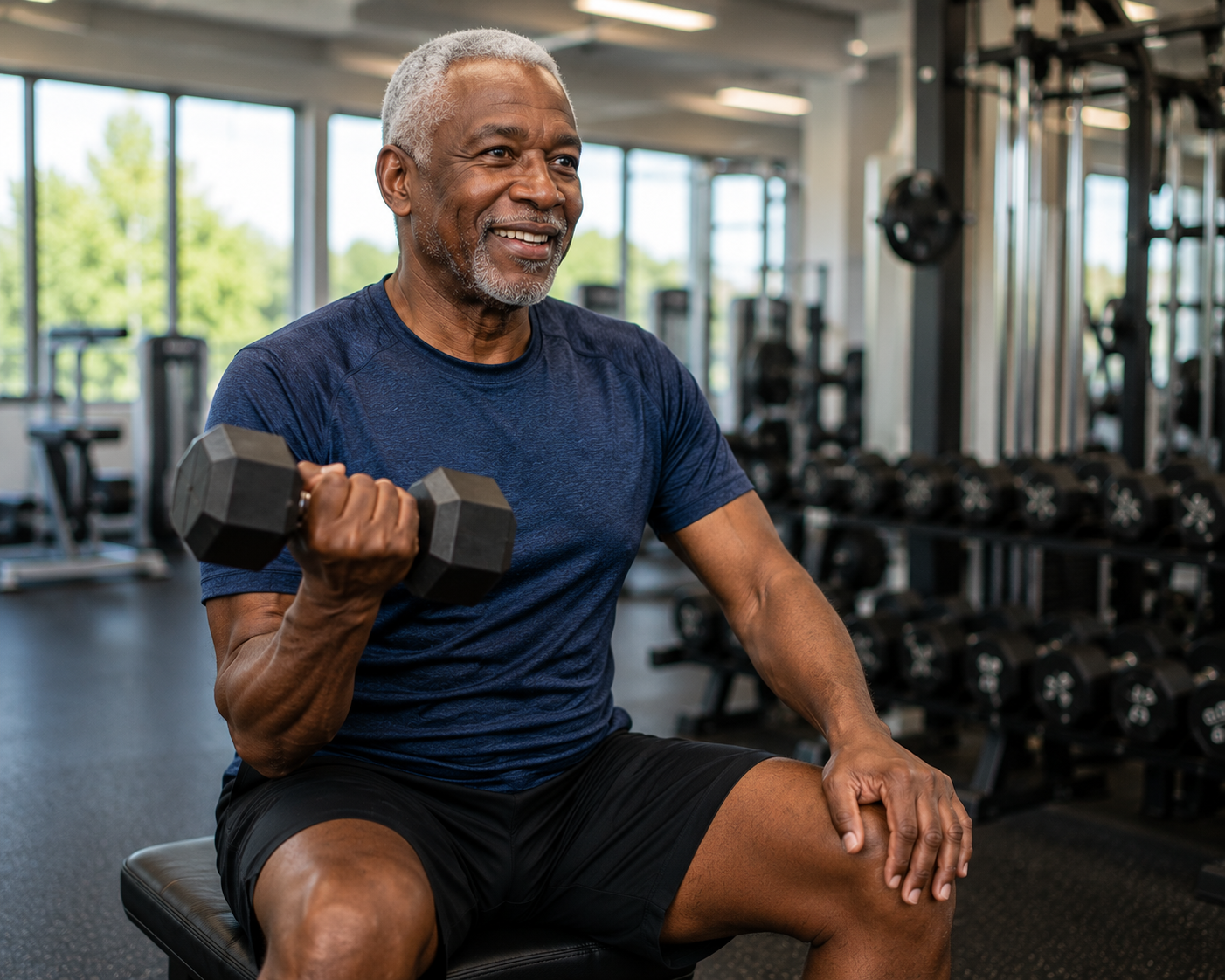
Older man exercising at physio clinic Middleton.
1. Keep Moving Regularly
One of the simplest things you can do for your health as you get older is to keep moving.
Long periods of inactivity can contribute to loss of muscle strength, reduced fitness and poorer balance. It can also create a vicious cycle: the less we do, the harder activity feels, and the less confident we become about doing it.
Regular activity doesn't have to mean joining a gym or taking up a new sport.
Good options include:
Walking
Gardening
Swimming
Cycling
Strength exercises
Balance exercises
Everyday movements such as repeatedly standing from a chair
The important thing is finding activities that you enjoy and can perform regularly.
Little and often is usually much better than doing nothing all week and trying to make up for it at the weekend.
For some people, pain, previous injuries, surgery or concerns about falling can make returning to exercise more difficult. This is where working with a physiotherapist can be particularly useful, helping you understand what you can safely do and how to gradually progress.
2. Make Strength a Priority
Maintaining muscle strength becomes increasingly important as we get older.
Strong muscles help us climb stairs, get out of chairs, carry shopping, walk further and recover our balance if we stumble.
Strength training doesn't necessarily mean lifting heavy weights in a gym. Depending on your starting point, exercises can be as simple as:
Sit-to-stands or chair squats
Step-ups
Wall or kitchen-worktop push-ups
Calf raises
Resistance-band exercises
Carrying appropriately weighted objects
As you become stronger, the exercises should gradually become more challenging.
This is important. To maintain strength, we need to continue giving our muscles a reason to stay strong.
For people who are able, progressing towards faster, more powerful movements can also be useful. The ability to generate strength quickly — sometimes called muscle power — is particularly important when climbing stairs, getting out of a chair or reacting quickly if you lose your balance.
At our Middleton physiotherapy clinic at David Lloyd Manchester North, we have the added advantage of access to an excellent gym environment, allowing our physiotherapists to progress appropriate patients from simple rehabilitation exercises towards more functional strength and gym-based exercise.
The aim isn't necessarily to turn you into a gym enthusiast. It's to build enough strength to make everyday life easier.
3. Challenge Your Balance
Balance can change as we get older, but that doesn't mean we simply have to accept becoming unsteady.
Balance can be trained.
Depending on your ability, this might involve:
Standing with your feet closer together
Standing on one leg
Heel-to-toe walking
Stepping in different directions
Tai Chi
Structured strength and balance exercises
The key is making the exercise challenging enough to stimulate improvement while remaining safe.
Improving leg strength and balance can be particularly important for people who have started to feel less confident walking, have become nervous on stairs or uneven ground, or are concerned about their risk of falling.
If your balance has deteriorated significantly, you've had a recent fall, or you're worried about falling, we recommend having an assessment before attempting more challenging exercises on your own.

Older couple walking as part of rehab plan
Physiotherapy for Strength and Balance in Middleton and Stockport
Sometimes simply being told to "exercise more" isn't particularly helpful.
You may have arthritis, a previous joint replacement, persistent back or knee pain, reduced balance, or simply be unsure where to start.
This is where an individual physiotherapy assessment can help.
At PhysioHub Middleton and PhysioHub Stockport, we can assess areas including:
Leg and upper-body strength
Balance and stability
Walking and general mobility
Joint movement
Pain or stiffness
Functional activities such as stairs and getting out of a chair
Confidence with exercise
Your current exercise and activity levels
From there, we can create an individual rehabilitation programme based on what you want to achieve.
For one person that might mean being able to walk to the local shops confidently. For another, it could mean returning to golf, gardening, looking after grandchildren or getting back into the gym.
Your age doesn't determine your rehabilitation goals — your ability and what matters to you do.
It Is Never Too Late to Get Stronger
Ageing is inevitable. Becoming inactive, weak and dependent is not.
The human body remains remarkably adaptable throughout life. Regular movement, strength training and balance exercises can make a meaningful difference to how confidently you move and how easily you manage everyday activities.
And you don't need to transform your lifestyle overnight.
Start with something manageable. Walk a little more. Practise getting out of a chair several times. Add a few simple strengthening exercises to your week.
Then gradually build from there.
The goal isn't simply to live longer — it's to stay strong enough to keep doing the things you enjoy.
Need Help Getting Stronger?
If you're over 65 and feel that your strength, mobility or balance isn't what it used to be, our physiotherapy team can help.
Tom O'Sullivan and his colleagues at PhysioHub are experienced in the assessment and rehabilitation of older adults, helping patients build strength, improve balance, recover from injury and remain as active and independent as possible.
Appointments are available at:
PhysioHub Middleton
Based inside David Lloyd Manchester North, Middleton, serving patients from Middleton and the surrounding North Manchester area.
PhysioHub Stockport
Our Heaton Moor, Stockport clinic, serving patients from Heaton Moor and the wider Stockport area.
Whether your goal is to walk further, feel steadier on your feet, return to the gym or simply remain independent for as long as possible, we'll help you develop a rehabilitation plan appropriate for you.